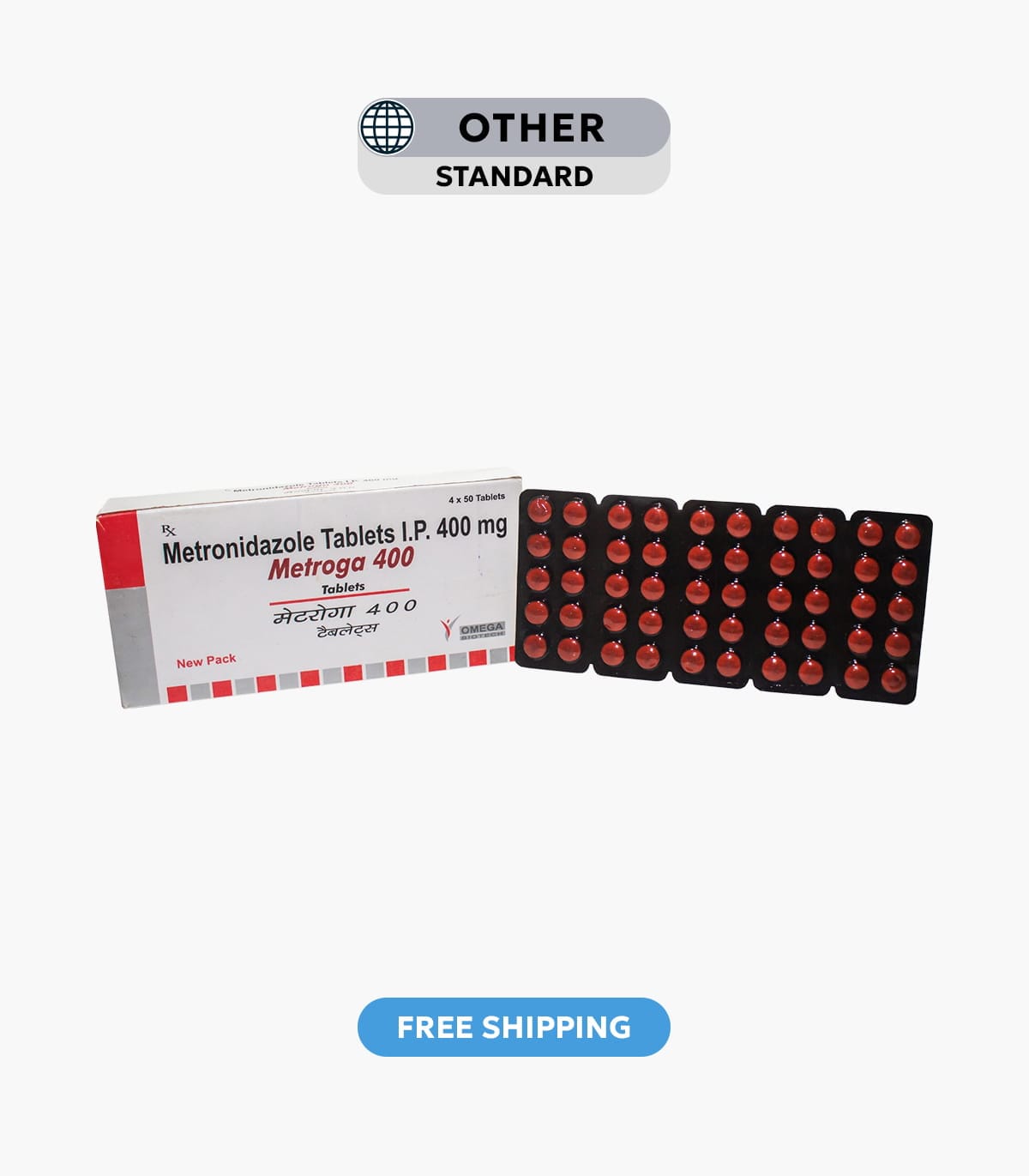
Metroga 400mg (Metronidazole Tablets IP)
Metronidazole 400 mg Tablets (marketed as Metroga) are prescription antibiotics widely used in clinical practice to treat a range of bacterial and protozoal infections. Metronidazole belongs to the nitroimidazole class of antimicrobial agents and is effective against specific anaerobic bacteria and certain protozoa.
When prescribed by a qualified healthcare provider, metronidazole tablets are often part of an evidence‑based treatment plan designed to address infections in areas such as the gastrointestinal tract, reproductive organs, skin and soft tissues, and oral cavity. Safe and effective use requires medical assessment, correct dosing, and completion of the recommended course of therapy.
$55.00 – $165.00Price range: $55.00 through $165.00
* The information on this page is a summary and is not intended to cover all available information about this medication. It does not cover all possible uses, directions, precautions, drug interactions or adverse effects and is not a substitute for the expertise and judgement of your healthcare professional.
Everything You Need To Know
Metronidazole 400 mg is a systemic antimicrobial medication that works by disrupting DNA synthesis in susceptible anaerobic bacteria and protozoa, ultimately leading to the elimination of the infection. It is administered orally and absorbed through the gastrointestinal tract to reach effective therapeutic levels in infected tissues.
Metronidazole is not effective against viral or fungal infections and should only be used when clinically indicated and prescribed by a healthcare professional.
Under the supervision of a physician, metronidazole may be used for the management of:
Anaerobic bacterial infections, such as intra‑abdominal infections
Certain protozoal infections (e.g., giardiasis, trichomoniasis)
Bacterial vaginosis, when indicated by a clinician
Dental and periodontal infections involving anaerobic bacteria
Skin and soft tissue infections with susceptible organisms
Important: Metronidazole is not effective against viral illnesses such as the common cold or flu, and its use should be guided by clinical diagnosis.
Metronidazole should be taken exactly as directed by your healthcare provider:
Take tablets orally with a full glass of water.
The frequency and duration of treatment depend on the type and severity of the infection.
Complete the full course of therapy even if symptoms improve before finishing the medication — premature discontinuation can lead to incomplete treatment and recurrence.
Avoid alcohol consumption during treatment and for at least 48–72 hours after the last dose, as metronidazole can interact negatively with alcohol.
Always follow your clinician’s instructions regarding dosage, timing, and duration of treatment.
Before starting metronidazole, inform your healthcare provider about:
Medical history, including liver or kidney disease, neurological conditions, or blood disorders
Allergies to nitroimidazole antibiotics
Pregnancy or breastfeeding status (safety in pregnancy/breastfeeding should be evaluated by a clinician)
Current medications and supplements, as interactions can occur
Possible side effects may include nausea, metallic taste, headache, dizziness, or mild gastrointestinal discomfort. Serious reactions are rare but may include allergic reactions, neurological symptoms, or severe gastrointestinal issues — seek medical attention if you experience concerning symptoms.
Patients should be advised to avoid driving or operating heavy machinery if they experience dizziness or altered coordination.


Reviews
Clear filtersThere are no reviews yet.